Artificial intelligence
GEMA v Suno: When the AI model knows the pop song by heart
Tobias Reinhardtapprox. 6 min read
Enter nothing but the lyrics and the AI music generator Suno produces a recognisable version of “Atemlos durch die Nacht”. The Regional Court of Munich I sees this as a reproduction within the model that no exception covers, and holds the provider responsible. For companies training AI models or using AI generators, the GEMA v Suno ruling means: protected training data needs a licence, and the AI Act is no substitute for one.
 AI-generated
GEMA v Suno: six hits inside the model
GEMA staff type the lyrics of „Atemlos durch die Nacht“ into an AI music generator, select the style „Schlager“ and enter the title. Seconds later there are audio recordings in which the court later recognises the original. The same exercise with „Daddy Cool“, „Rasputin“, „Big in Japan“, „Forever Young“ and the chorus of „Mambo No. 5“. The defendant is the operator of the generator, Suno, based in the USA.
The Regional Court of Munich I largely upheld the claim in its judgment of 31 July 2026 (case no. 42 O 763/25). The key point: if musical works are stored in an AI model in such a way that simple inputs produce them recognisably, that amounts to reproduction. The text and data mining exception does not cover this, and it is the provider of the model who is liable, not the user. Suno must cease using the six works, provide information and is liable in principle for damages. The judgment is not final; the appeal is pending before the Higher Regional Court of Munich.
Prompts with no musical specifications
Suno countered that GEMA had provoked the results: 338 attempts, complete original lyrics, genre specifications. The lyrics, it argued, inevitably dictate rhythm and melodic contour. For the court, the inputs were simple and open-ended: lyrics, style, title, nothing about melody, harmony, rhythm or arrangement. The same lyrics can be set as a ballad or as a dance number. And anyone who enters the same prompt 176 times is not steering the model in any direction.
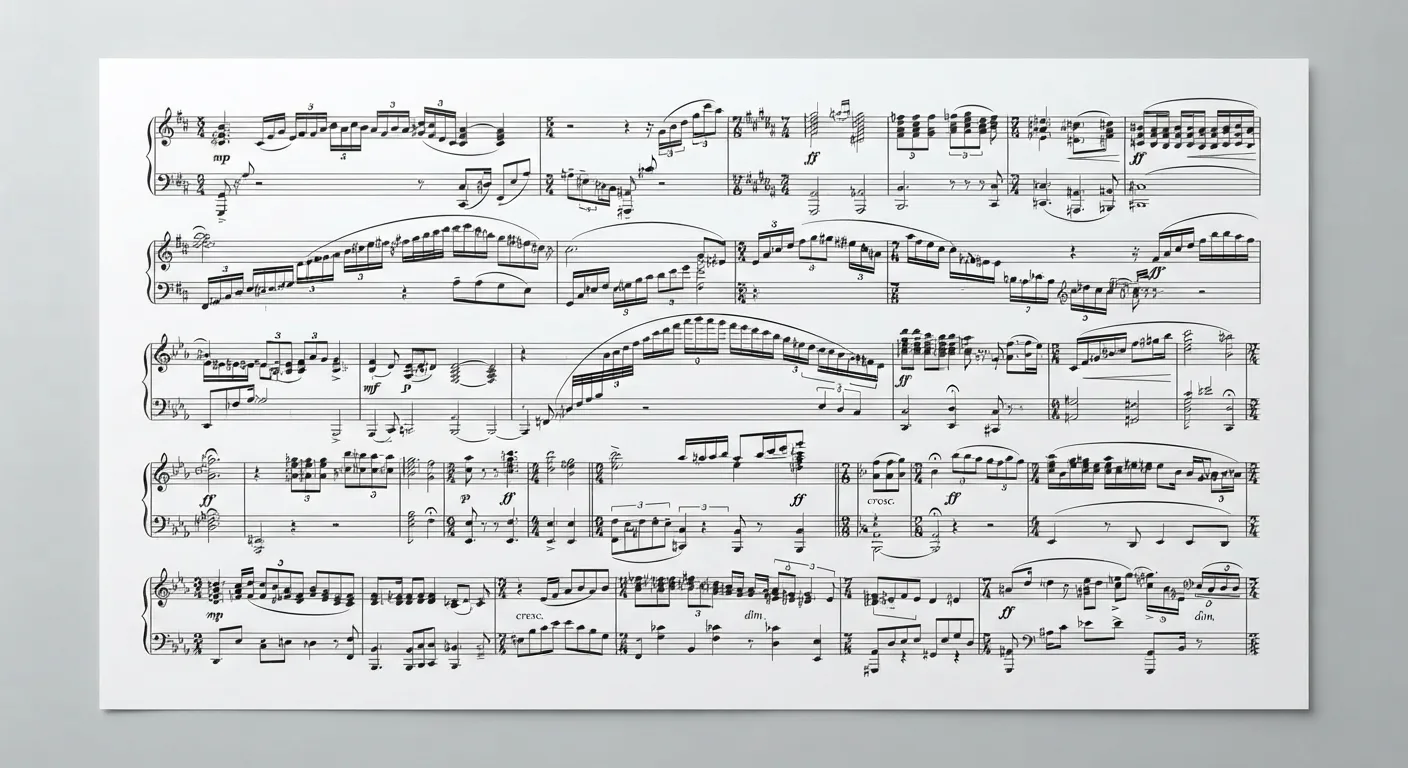
Whether the originals could be recognised in the outputs was something the chamber assessed itself. It listened to all the tracks at the hearing and compared extracts of the scores. In each work it found characteristic elements again, for instance in „Atemlos“ the entire dramatic structure with its heightened post-chorus. It considered an expert opinion unnecessary, because its members belong to the circle of average music listeners.
Memorisation is reproduction
What is inside a trained model? Suno argued that the parameters contained only mathematically learned patterns. The storage space was not even enough for one per cent of the training data, and there was no such thing as a „parameter player“. The court pointed to the research: models can „memorise“ training data, that is, take it in such a way that it can be retrieved again through outputs. Whether all the training data fits in is irrelevant for that purpose. If a simple prompt produces a recognisable work, the work is fixed in the model.
A reproduction is any physical fixation that makes a work perceptible directly or indirectly. An MP3 file stores music with loss and is still a copy. The same applies to the model: the work is scattered across the parameters, but retrievable with the generator and a simple prompt. Because Suno keeps the model on servers in Germany, this reproduction takes place here.
Text and data mining does not help
Copyright law permits text and data mining, that is, the automated analysis of works in order to obtain patterns and correlations. For this purpose, lawfully accessible works may be copied without asking and without paying, provided no reservation of use stands in the way. The court distinguishes three phases: collecting the training data, the training itself, and the later use via prompts. The exception covers copies made in the first phase, because mere analysis does not affect the author economically. If, however, the work remains in the model, that goes beyond analysis. There is no permission for this, because the risk of memorisation arises solely from the provider's sphere.
Two further objections failed. Suno had pulled the recordings from YouTube by stream ripping and in doing so circumvented the „rolling cipher“, a technical barrier against downloading. Lawful access was therefore lacking. And the AI Act changes nothing. It obliges providers to have a copyright policy and to publish a summary of the training content. That is meant to make enforcement easier for rightholders; it does not replace a licence. The European code of practice for AI models itself states that compliance with it does not mean compliance with copyright law.
The provider is responsible
According to the judgment, merely offering the generator already constitutes a communication to the public of the memorised works, regardless of whether anyone retrieves them. Suno is not a neutral intermediary like a hosting platform. The company selected the training data, designed the training and has been aware of the phenomenon of memorisation since a study from 2021 at the latest. The liability privilege of the Digital Services Act does not apply, because the outputs are the provider's own content. Suno is also liable for the outputs as a principal, because an AI model is not a recording device. With simple prompts it is the model that determines the content; the user merely triggers the process.
GEMA lost on one point only: retrieval at a time of one's own choosing, that is, making available to the public, is not proven where up to 176 attempts are needed. For the training in the USA, the chamber denied fair use under American law. The outputs are substantially similar to the originals, the use is commercial, and the data came from circumventing an access barrier. In addition, GEMA may publish the judgment at Suno's expense on a quarter page of the Süddeutsche Zeitung.
AI and copyright in business
Anyone developing or adapting AI models faces a clear calculation after this judgment: protected training data requires a licence if the model might retain it. A copyright policy under the AI Act, a published training summary and filters added after the fact do not replace it. Anyone circumventing technical barriers when collecting data loses the exception and is in a poor position under American law too. A seat in the USA offers no protection as long as the model runs on servers in Germany.
Even those who merely use AI generators, for advertising spots or podcasts for example, should be aware of the judgment. An output may be an adaptation of a protected work without the user noticing. The judgment does not absolve the user: anyone who publishes such a track is using the third-party work themselves, and no subscription can grant rights to it. For rightholders, the judgment lowers the evidential hurdle: a simple prompt and a recognisable output were enough proof for the court.
Conclusion
The Regional Court of Munich I treats an AI model that can output works recognisably like any other form of storage. The work is reproduced within it, the text and data mining exception does not apply, and the provider is liable for both the offering and the outputs. The AI Act, the code of practice and retrofitted filters change nothing about that.
Anyone training models with protected content needs licences. Anyone using AI generators should know that a „new“ track can also be an old one. Whether this stands will first be decided by the Higher Regional Court of Munich.