Artificial intelligence
Real post or AI fake? Screenshots as evidence in employment law
Tobias Reinhardtapprox. 6 min read
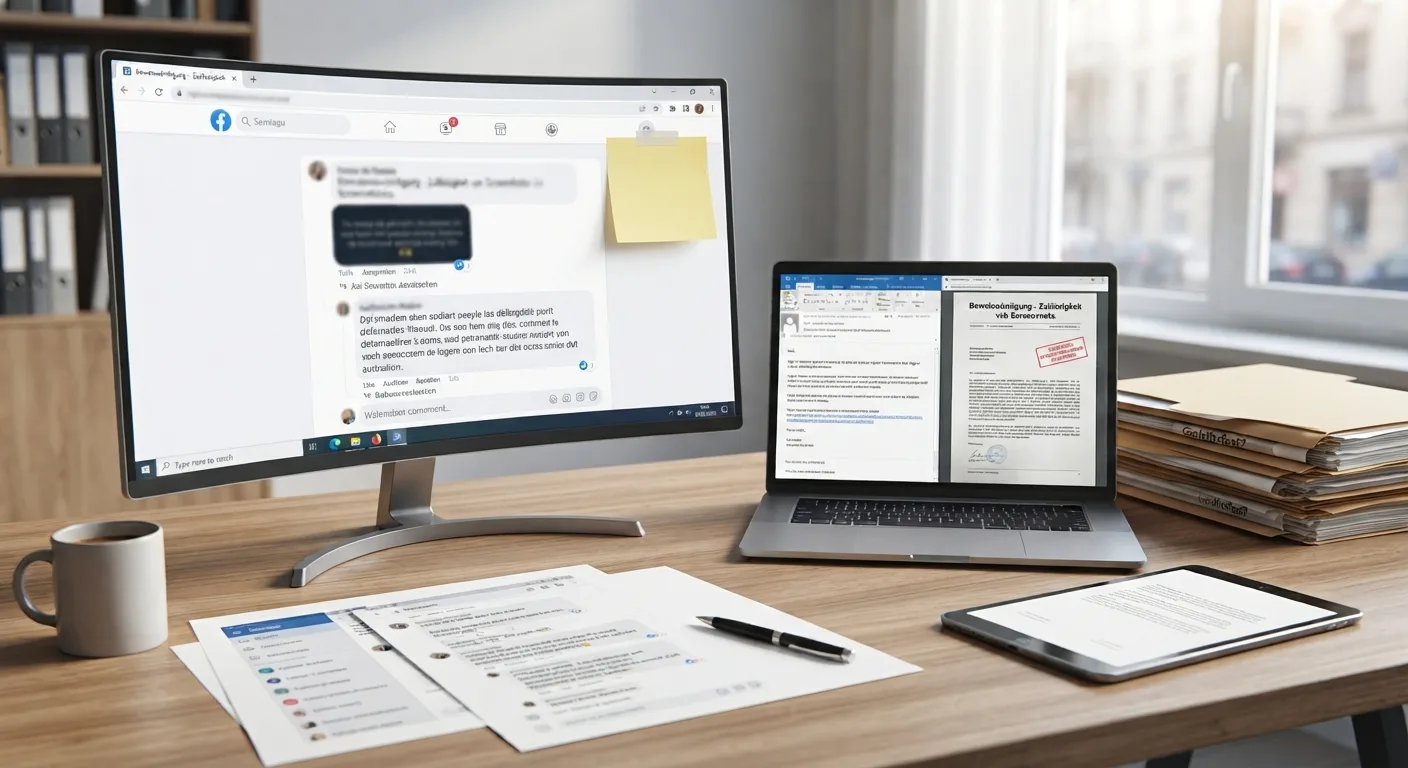
During a works council election campaign, an employee is said to have posted a colleague's election poster on Facebook, doctored with a Hitler-style moustache. He claims the screenshot is an AI fake. The Duisburg Labour Court dismissed his claim against the written warning; the Düsseldorf Regional Labour Court now intends to hear witnesses. The case shows what a screenshot is worth as evidence and how companies should preserve social media incidents.
 AI-generated
An election campaign, a post, a written warning
A Facebook post that no longer exists, two screenshots of it and an employee who says: that was an AI fake. That is all it takes for a dispute to run through two instances. The Duisburg Labour Court dismissed the employee's claim in a judgment of 18 December 2025 (case no. 1 Ca 1438/25). The appeal is now before the Düsseldorf Regional Labour Court (case no. 6 SLa 56/26), and the court there intends to establish whether the post was genuine by hearing witnesses. The case shows what matters when the other side disputes a screenshot: witnesses, and how the post found its way into the group.
The post with the moustache
The employee has worked as a blue-collar employee at a steel company since 1990 and has been a substitute member of the works council since 2013, meaning he steps in for members who leave or are unavailable. In the works council election in summer 2025 he stood on list 4, while a female colleague stood on list 9, which was organised by the union. Employees of the company exchanged views in a closed Facebook group in which the administrator had to approve every request to join. The employee was a member of this group.
According to the employer, a post appeared there under the employee's name and profile picture. The text asked colleagues whether they really wanted to be represented by such people and promoted list 4 as level-headed and sensible. Below it was a section of list 9's election poster showing the colleague's picture, into which a moustache modelled on Adolf Hitler's had been inserted. According to the employer, the colleague and another employee captured the post in screenshots.
On 10 July 2025 the company issued a written warning. The allegation: the employee had seriously defamed and disparaged his colleague, because the moustache created a link to Hitler and to National Socialism.
Fake alleged, appeal pending
The employee denies having written the post and is demanding that the written warning be removed. His explanation: the post is a fake intended to be pinned on him. Any third party could take his profile picture and use image editing or artificial intelligence to build a Facebook post that looks entirely convincing. Moreover, posts could only appear in the group once released by the administrator, and the administrator was unaware of this post.
The Duisburg Labour Court dismissed the claim. Why is not known, as the reasons for the judgment have not been published so far. The employee appealed. The Düsseldorf Regional Labour Court scheduled a hearing for 19 June 2026 and, at the employer's request, summoned the colleague and the second employee as witnesses. The administrator of the group, named by the employee as counter-evidence, was added to them.
No hearing took place on that day. The court cancelled the date because one witness was unavailable and announced that a new date would be given later. As at the end of September 2026, neither a new date nor a decision has become public. The question of whether the post is genuine therefore remains open at second instance.
A screenshot as evidence: what it is worth
A written warning is an employer's formal reprimand for a breach of duty; it goes into the personnel file and can pave the way for a later dismissal. If the allegation is unfounded, the employee can demand that it be removed again. In the proceedings about this, the employer has to prove that the allegation is correct. For the steel company this means it must satisfy the court that the post appeared in the group under the employee's profile.
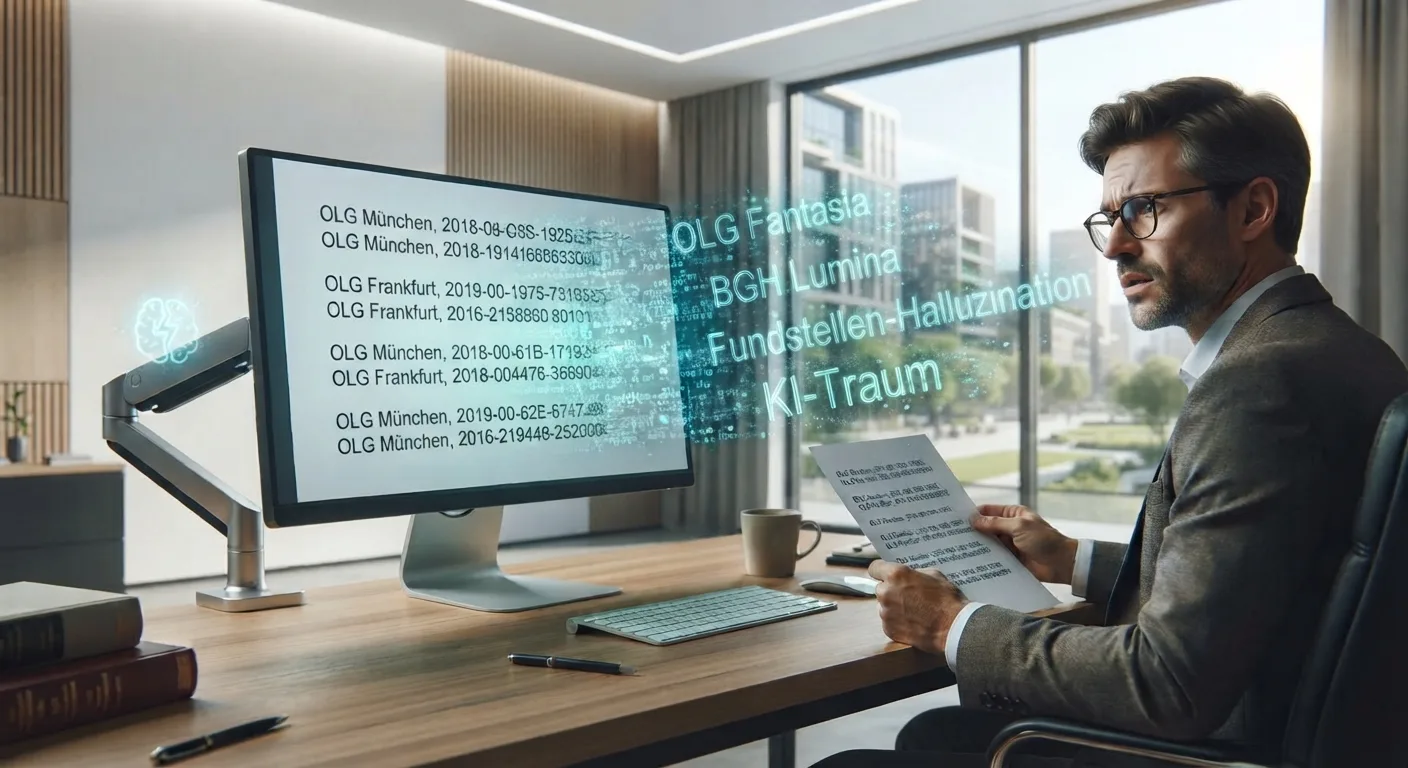
A screenshot helps with this, but decides nothing on its own. In court it has no special evidential value in the way a signed document does; it is an image that the court looks at and assesses according to its own free conviction. If the other side disputes its authenticity, the court must establish whether it believes the image. The objection that AI can be used to recreate any post convincingly is quickly made: it costs nothing and fits every screenshot in the world. Whether it succeeds depends on what else the court learns.
The approach taken by the Regional Labour Court shows what then matters. The two employees who took the screenshots are to describe as witnesses what they saw in the group. The administrator is to say whether posts really needed his release and whether he knew of this one. The image thus turns into a question put to people: who saw the post, when and where, and how did it get into the group?
Securing evidence before the post disappears
For HR departments this means: anyone who wants to issue a written warning or a dismissal because of a social media post should secure the evidence beforehand. The case shows how quickly the original disappears. The post no longer exists; what remains are two screenshots and the recollections of those who saw it.
It therefore makes sense to record who saw and saved the post, when and on which device. The screenshot itself should show the date, the time, the group and the sender. It also helps to open the post from a second account and save it there as well, while it is still up. With closed groups, contacting the administrator early is worthwhile: he knows whether posts have to be approved and who manages the group. That is precisely the question the Regional Labour Court is now clarifying with a witness.
On the other side stands the employee who disputes a post. His reference to AI has to hold up against the statements of two colleagues who claim to have seen the post in the group. That is why he named the administrator, who is to confirm that he approved nothing. Whether that succeeds will emerge from the taking of evidence.
Conclusion
In court, a screenshot is an image that the court may believe, but need not. If the person concerned disputes its authenticity, what matters are witnesses who saw the post and how it found its way into the group. The Düsseldorf Regional Labour Court intends to clarify exactly that. The employee lost at first instance; the appeal is open.
For companies this means: secure the evidence while the post is still up, and record who saw it and when. The objection of an "AI fake" is an obvious one, and when it comes, more should be on the table than a single image.