Legal Tech
Text snippets, templates or AI: what makes pleadings faster
Tobias Reinhardtapprox. 5 min read
Anyone wanting to draft pleadings faster has three tools to choose from today: classic text snippets, automated templates and generative AI. All three save time, but in quite different places. And only one of them can invent court rulings.
 AI-generated
Three tools, three ideas
The statement of defence in a road traffic case, the unfair dismissal claim, the reminder to the client who has not paid: a large part of a lawyer's drafting work repeats itself. That is precisely why three approaches compete to shorten it. The text block stores a tried and tested paragraph and inserts it at the push of a button. The automated template produces an entire document by combining blocks with the data held in the electronic file. And generative AI, meaning language models such as ChatGPT, writes a new text on request that has never existed in that form before.
The key point first: text blocks and templates save time on what repeats itself. AI saves time on what is different every time. Anyone who confuses the tools ends up either with trivial boilerplate or with a pleading that has to be checked sentence by sentence.
Text blocks: old, but reliable
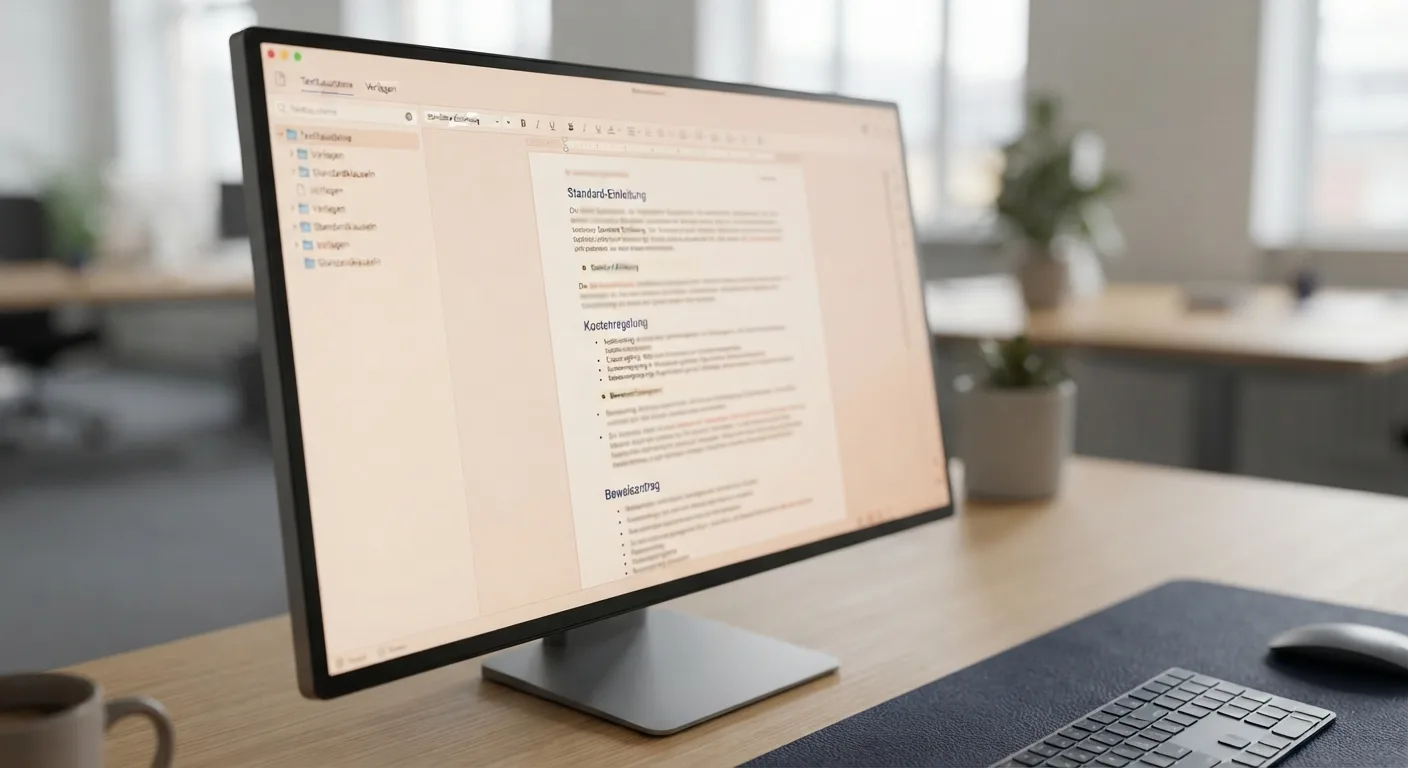
The text block is the oldest form of legal tech and is built into every practice management system. Its appeal lies in its reliability: the paragraph on limitation periods, the notice about costs, the wording of the prayer for relief were written carefully once and remain unchanged thereafter. What was once correct stays correct until someone deliberately changes it.
The price for this is the groundwork. Every block first has to be drafted, organised and entered into the software. According to the specialist portal legal-tech.de, the templates supplied by the vendors are often rather trivial. The real value only emerges once the law firm stores its own wording, matured over years. Anyone who shies away from this groundwork ends up with software full of empty drawers.
Templates: the pleading straight from the file
Document automation goes a step further. It no longer asks which paragraph should be inserted, but builds the complete document from file data and text blocks. Name, address, file reference, deadlines and amounts move automatically to the right place, and depending on the constellation of the case the software selects the appropriate block of argument.
How much this achieves is shown by an example described by legal-tech.de from a law firm handling around a thousand similar claims in parallel. The time needed for a statement of defence fell there from 90 to 15 minutes. That is the world of mass proceedings and recurring case patterns. For the firm with three lawyers and a colourful mix of matters, building such templates only pays off where a type of case really does come up frequently: the unfair dismissal claim, the appeal against a fine, the demand for payment.
AI: fast, articulate, unreliable
Generative AI is the newest tool and the only one that works without any groundwork. A set of facts, an instruction, and seconds later a readable draft appears on the screen. According to the 2025 legal tech survey by the portal legal-tech.de, in which around 80 mostly small firms and sole practitioners took part, more than half of the respondents use ChatGPT often or sometimes. Document drafting is one of the areas in which participants see the greatest benefit. A benchmark report by Wolters Kluwer with 99 participants from Germany arrives at similar figures for smaller firms.
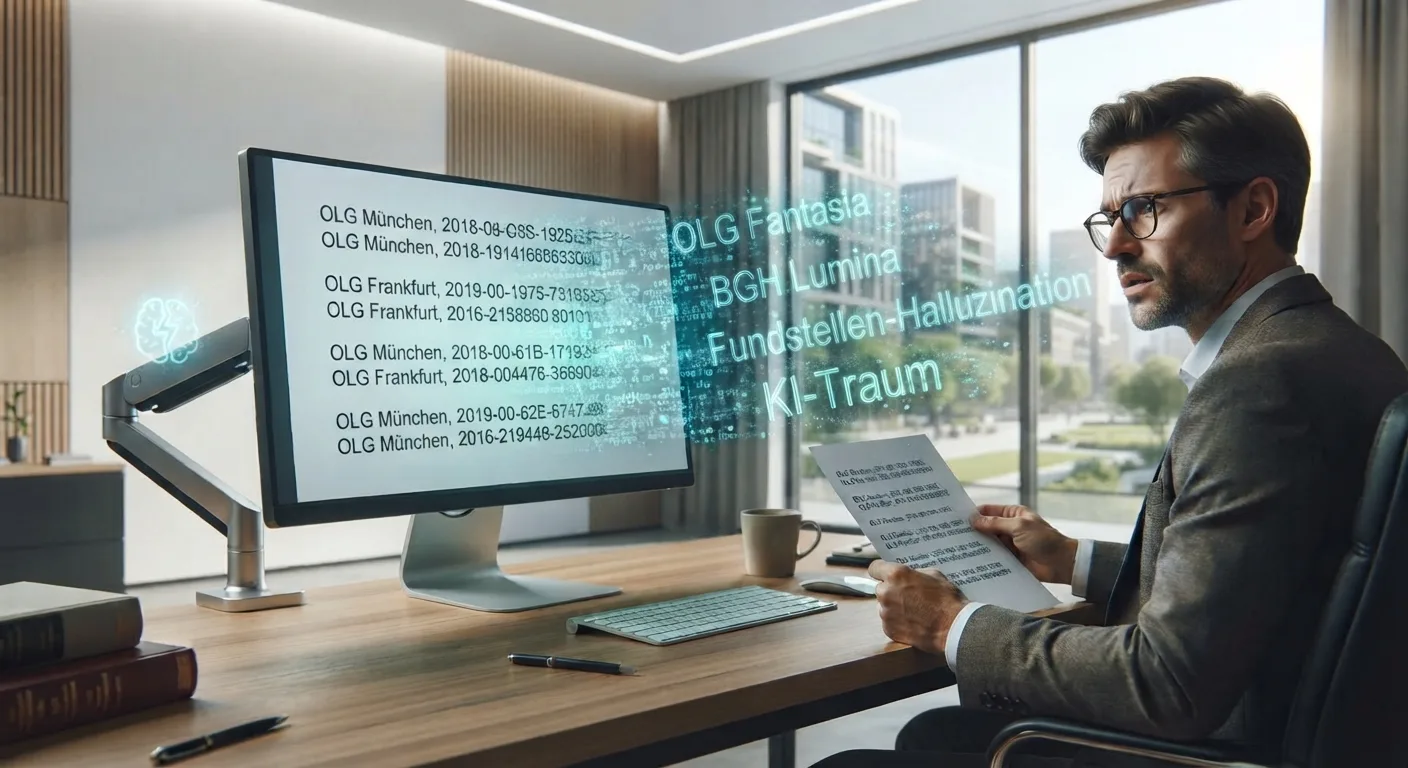
The catch is well known and occupied the courts several times in 2025. In July, the Cologne Local Court criticised a pleading containing invented citations of judgments, a monograph that did not exist and an article that had never been written. In November, the Kammergericht in Berlin found that a cited decision of the Federal Court of Justice (BGH) could not be located in any database, and spoke of an AI that was "fantasising". Both courts say the same thing: a lawyer may use AI, but must check every sentence and every citation. The German Federal Bar (BRAK) recorded this in its guidance of January 2025 as a duty to review and verify, alongside confidentiality and transparency towards the client.
This shifts where the time is saved. What is saved at the drafting stage partly comes back at the checking stage. A text block does not need to be checked, because it has already been checked. An AI draft always does.
What suits which case
The three tools do not rule each other out, they serve different parts of a pleading. The framework, the heading, the applications, the standard notices: that is work for text blocks and templates, because it repeats itself and because mistakes here are particularly embarrassing. The account of the facts, the summary of a long contract, the first draft of an argument on an unusual question: here AI can supply raw text that the lawyer then shapes and verifies.
It becomes interesting at the interface. Anyone who gives the AI their own text blocks and earlier pleadings as material receives drafts in their own style and based on wording that has already been checked. The AI then invents less, because it draws on the firm's own stock. The groundwork that text blocks have always demanded thus becomes the foundation for the new tool. The firm that never maintained its text blocks is equally empty-handed when it comes to AI.
Conclusion
Pleadings come together fastest when each tool does what it is good at: text blocks and templates for everything that repeats itself, AI for the first attempt at everything that is new. The time saved by AI is real, but it does not end with the draft, only after the check. Anyone who factors that in will never be reminded by a court of a fantasising AI.