Artificial intelligence
No copyright for AI logos: the Munich Local Court ruling
Tobias Reinhardtapprox. 6 min read
A man has a generative AI create three logos for him, an acquaintance copies them onto his website, and the Munich Local Court dismisses the claim for injunctive relief. Neither a prompt of 1,700 characters nor several rounds of corrections turn an AI logo into a protected work. For businesses that design with AI, this means: without a defining human contribution there is no copyright, and other routes to protection become important.
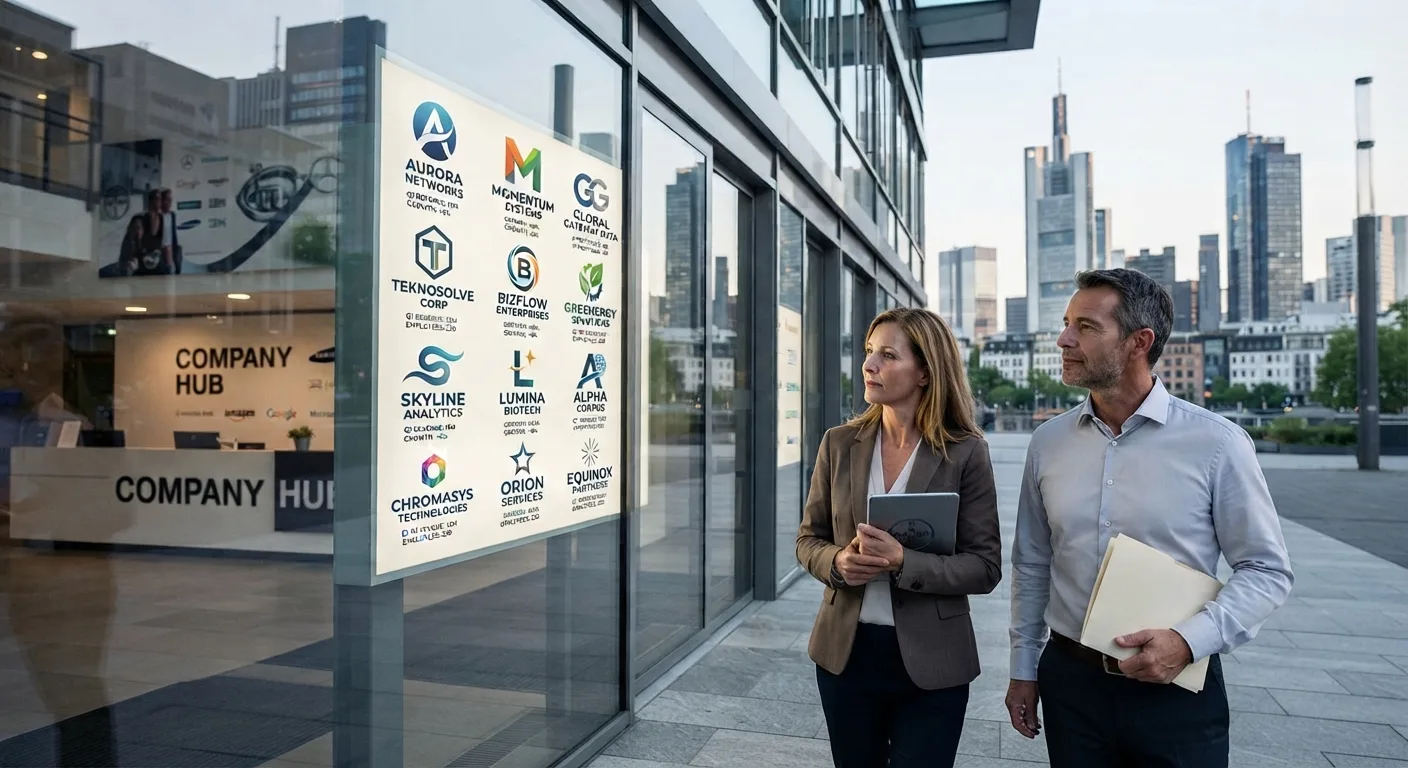 AI-generated
Three logos and an acquaintance
A man has a generative AI create three logos for him: a handshake between two people of different skin colour with a ringing bell, an envelope in front of a building with columns, and a laptop with a book bearing a section symbol floating in front of its screen. An acquaintance copies all three from the man's personal website to his own, without permission. A request to delete them dated 3 July 2025 goes unanswered, so the creator sues for injunctive relief and deletion.
The Munich Local Court dismissed the claim in a judgment of 13 February 2026 (case no. 142 C 9786/25). The core message: an AI output enjoys copyright protection only if the human's creative instructions shape the result so strongly that it counts, overall, as his own creation. General, open-ended instructions to the AI are not enough, not even in large numbers. The claimant bears the costs; the amount in dispute is 10,000 euros.
Tool or black box?
The claimant saw the AI as a tool like any other, just more powerful. His creative contribution lay in the prompts, the instructions to the AI with which he brought the image in his head into the world. He compared the step-by-step refinement to a sculptor chiselling bit by bit and checking at every step whether the statue matches his vision.
The defendant countered that the user of a generative AI is merely a source of ideas or a client. Selection, combination and design of the image elements are handled automatically by the AI; the human only triggers a technical process. Because no one can predict how the AI arrives at its result, it is a black box for the user. Anyone who gives it a description is commissioning it like a third person, and that person decides on the appearance.
The parties knew each other and had already argued about this very question before. The court suspected an academic interest in the proceedings and noted that producing legal opinions is not the task of the courts. Since the case also concerned the actual use of the images, it nevertheless decided on the merits.
The court's standard
The court examined whether the logos are works of applied art, that is, designs with a practical purpose which the Copyright Act protects just as it does paintings. According to the European Court of Justice, a work is an author's own intellectual creation in which his free creative choices find expression. If the design is dictated by technology, rules or other constraints, originality is lacking.
For AI outputs, the judgment says, what matters is how much human creative influence remains despite the software-driven process. Protection is possible where a human intervenes in the AI result, whether afterwards or step by step while prompting, so that his personality shows in the outcome. Figuratively speaking, the AI must be closer to an aid than to an independent instrument of creation. The court's line: the creative elements from the prompting must dominate the result.
Merely choosing between several suggestions is not enough. It is also irrelevant whether a paid premium version was used or how elaborately a prompt was phrased. Copyright rewards neither investment nor time spent nor diligence, but only the result of a creative activity. Whoever claims protection must prove it.
A prompt is a commission
All three logos failed this test. For the laptop with the book, the instruction ran to two lines: a "simple but unusual" logo for a website with legal texts. The court found no creative choices in that.
For the envelope, the claimant had drafted and tested a prompt of 1,700 characters. The length did not help him. The descriptions were largely too general for the court to allow any conclusions about the appearance: an original, abstract, modern, minimalist logo. Where the prompt did become specific, it left the choice to the AI, for instance between waves, lines, rays, circles or unfolding shapes, and as for the colours, anything besides dark blue that the AI considered fitting. For the court, this was a written commission to a human designer.
The handshake involved the most effort. The initial prompt called for a handshake and a bell for an app with job notifications, trustworthy and plain in style, with the shapes creatively blended. The claimant picked one of four suggestions and had it adjusted in further rounds. For the court, this was mostly craft: correcting the AI's mistakes, assigning skin tones, making the hands more delicate and more realistic. Telling the AI that the bell should look more artistic expresses a wish and supplies no design. It alters details of an image shaped by the AI. On an overall view, the court found that the AI's technical activity outweighed the claimant's creative influence.
AI logos and copyright in business
The judgment concerns every company that generates logos, graphics or advertising images with AI. Anyone who merely describes, selects and refines ends up holding an image without copyright. If a competitor takes it, copyright is of no help. Nor do the AI provider's terms of use change this, even where they promise the user all rights to the output: no one can grant a right that never came into existence.
Other routes remain. A logo can be registered as a trade mark, since trade mark law requires distinctiveness, not creative achievement. Similarly, a registered design protects a design that is new and stands out from what is already known. And then there is the human: according to the judgment, an intervention in the AI result can establish protection if it shapes that result. Having a graphic designer develop the AI draft independently puts you in a better position than sending another round of corrective prompts.
Anyone relying on protection for an AI logo should document the creation process, because the burden of proof lies with the creator. When working with an agency, it is worth asking how the logo came about. Conversely, it is not a good idea to treat other people's AI images as free for the taking: you cannot tell by looking whether a human shaped them, and trade mark and unfair competition law apply in any event.
Conclusion
The Munich Local Court denies copyright protection to three AI logos because the creator left the design to the AI. Neither a prompt of 1,700 characters nor several rounds of corrections changes that. An AI output is protected only once the human's creative instructions dominate the result.
For companies this means: AI logos need a different form of protection, such as a trade mark, or a human who turns the AI draft into a design of their own.












